

Truck Driver Recruiting: A 2026 Playbook for Small Carriers
A four-step truck driver recruiting playbook for small carriers: write a post drivers can say yes to, call within minutes, run the federal checks, and keep the new hire past day 30.
For the bigger picture, read our US truck driver shortage 2026.
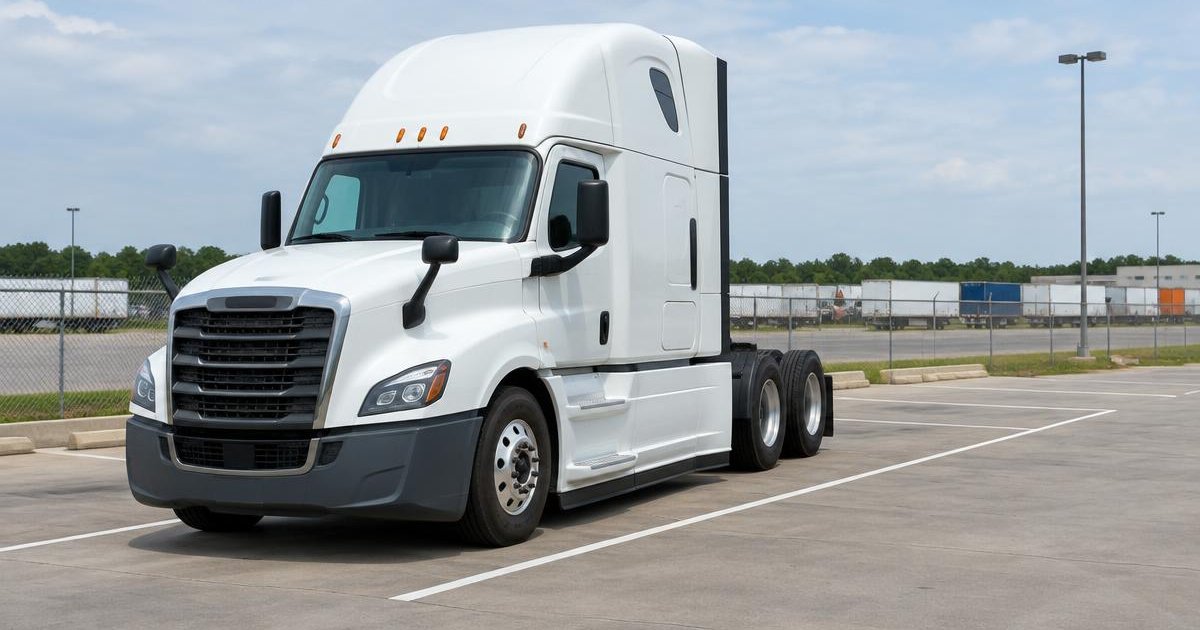
Truck driver recruiting works for a small carrier when four things happen in order: a job post a driver can say yes to, a call within minutes of the application, a compliance check that does not stall the hire, and a first month that gives the driver a reason to stay. Skip one and you pay for applicants you never reach. This playbook walks through each step, with the federal rules that apply and the response-time data that shows where most carriers lose drivers.
What truck driver recruiting looks like for a small carrier
The Bureau of Labor Statistics counted 2,221,200 heavy and tractor-trailer truck drivers in the US in 2025, and it projects about 214,500 openings a year from 2025 to 2035. Median pay was $58,640 a year in May 2025 (BLS Occupational Outlook Handbook, page last modified August 27, 2026). That is the market you hire in. Drivers have options, so the carrier that answers first and explains the job clearly gets the interview. For the wider picture, see our US truck driver shortage statistics.
A small fleet has one advantage a megacarrier does not: the owner or dispatcher can make a decision in one phone call. The rest of this guide is about not wasting that advantage. If you would rather hand the screening to a team, Trucky's Recruiter Services & Training covers application screening, DOT pre-checks and phone qualification, or trains your own recruiter.
Truck driver recruiting strategies: write the post, then pick the sources
Start with the post. In our experience, drivers look first at five things: pay structure, home time, equipment, lanes, and how often they get paid. Do not write "competitive pay." Write the cents per mile or the weekly guarantee, and say when settlement lands. Name the freight (dry van, reefer, flatbed) and the home-time pattern in plain words.
Then match the source to the seat:
- ★Job boards. Fast, but you compete with every carrier in the zip code. Good for filling a seat this month.
- ★Your own website. A short interest form on a page that loads on a phone. Keep the first form to a few fields and send the full DOT application after the first call, as we explain in why "keep it short" advice fails on CDL application forms.
- ★Driver referrals. Your best drivers know other drivers. Pay the bonus after the new hire passes a set number of days, not on day one.
- ★CDL schools and local events. Slow, but they build a pipeline of new drivers if your insurance allows them.
- ★Social media. Short videos of your trucks and your yard, posted in the regions you run.
Pick two sources and run them for 30 days before adding a third. A spreadsheet is enough to track the first few hires. When you pass that, move to recruiting software that logs every application, call and consent.
How to recruit truck drivers: call before they call someone else
In our experience, response time is where small carriers most often lose the hire. Lanefinder analyzed 23,074 dry van driver applications over the trailing 12 months and found 45% received a carrier response, with a median first response of 5 hours (Lanefinder dry van benchmark, updated October 2026). For flatbed, it analyzed 5,470 applications: 39% got a response, and the median time to first response was 1 hour (Lanefinder flatbed benchmark, October 2026). Lanefinder counts only carrier-initiated actions such as a call or a profile request, not automated messages.
Read that as a gap you can close. A driver who applies at 9 p.m. on Thursday and hears nothing until Monday has had the whole weekend to apply elsewhere. Our speed-to-lead guide for CDL recruiting covers the call and text cadence in detail. The short version:
1. Capture a phone number on the first form.
2. Get documented consent before you text.
3. Text first, then call.
4. Give every applicant one owner, so nobody assumes someone else called.
Picture a 12-truck carrier with one empty seat. The application lands Thursday night. With a four-field form, a text goes out in a minute and the dispatcher calls at 7 a.m. Friday, before the driver starts the day. With a two-page DOT application, the driver closes the tab and applies to a carrier that asked less.
Screen with the federal checklist in hand
Fast does not mean careless. Under 49 CFR 391.23, a carrier must run specific checks on every driver. Here is the short version (eCFR, 49 CFR 391.23 and 391.51, current text):
| Check | What the rule says | Timing |
|---|---|---|
| Motor vehicle record | Request a 3-year driving history from each licensing authority where the driver held a license in the preceding 3 years | Copy in the file within 30 days of the start date |
| Safety performance history | Investigate DOT-regulated employers from the preceding 3 years | Replies, or proof of good-faith efforts, in the file within 30 days of the start date |
| Drug and Alcohol Clearinghouse | Required for employers subject to 49 CFR 382.701(a) since January 6, 2023; if the driver refuses consent, the carrier must not let the driver operate a CMV | See FMCSA Clearinghouse for query timing |
| Medical examiner's certificate | Get a copy and verify the examiner is on the National Registry | Before the driver operates a CMV |
| Driver qualification file | Keep it for as long as the driver is employed and for three years afterward | Ongoing |
The FMCSA Clearinghouse employer page adds that employers must obtain driver consent before querying a driver's record and must buy a query plan to meet their query requirements (FMCSA Drug & Alcohol Clearinghouse, 2026). This is a summary, not legal advice. Ask your safety manager or a compliance specialist to confirm how it applies to your fleet.
Track five numbers every week
You cannot fix a funnel you do not measure. Trucky's weekly recruiter scorecard tracks five numbers, and a small carrier can copy them into a spreadsheet:
| Metric | How to calculate it |
|---|---|
| Applications | New applicants this week |
| Qualified rate | Qualified candidates divided by applications |
| No-shows | Scheduled interviews or orientations the driver skipped |
| Hires | Drivers who started |
| 30-day retention | Hires still driving for you 30 days after the start date |
If applications are low, fix the post and the sources. If the qualified rate is low, fix the job description. If no-shows are high, call sooner and confirm the day before. If retention is low, the problem starts after the hire, so look at onboarding and the first month.
Keep the driver past day 30
Recruiting does not end at the offer. Send the driver a one-page start plan: where to report, who to ask for, what to bring, and when the first settlement lands. Call on day 3, day 7, day 14 and day 30. Ask what surprised them and what they were not told in the interview. Fix pay errors on the first settlement the same week, because, in our experience, a wrong first check is a quick way to lose a new hire.
In-house recruiter, agency or both
A recruiter on payroll makes sense when you hire steadily. An outside partner makes sense when you hire in bursts or have no one to own the phone. Neither removes your own duty: the carrier keeps the driver qualification file under 49 CFR 391.51, so agency screening does not replace your paperwork. Our breakdown of agency versus in-house recruiter costs shows how to price the empty truck, so you can compare it with the cost of each option.
01How do you recruit truck drivers?
+
02What is the best way to recruit truck drivers?
+
03How long must a carrier keep a driver qualification file?
+
04Do small carriers need a truck driver recruiting agency?
+
05What do I check before a new CDL driver starts?
+
Sources
See how our Driver Recruiting service fills trucks.
Sourcing, screening and follow-up handled for you, so your recruiters talk to qualified CDL drivers instead of chasing dead leads.