

CDL Recruiting Agency vs In-House Recruiter: What It Really Costs to Fill a Truck in 2026
Compare the full cost of in-house recruiting, agency pricing and parked trucks, with a formula you can run on your own fleet.
The short answer
For most carriers under 100 trucks, the cheapest way to hire CDL drivers is the one that gets a parked truck moving fastest. That is usually not the option with the lowest invoice.
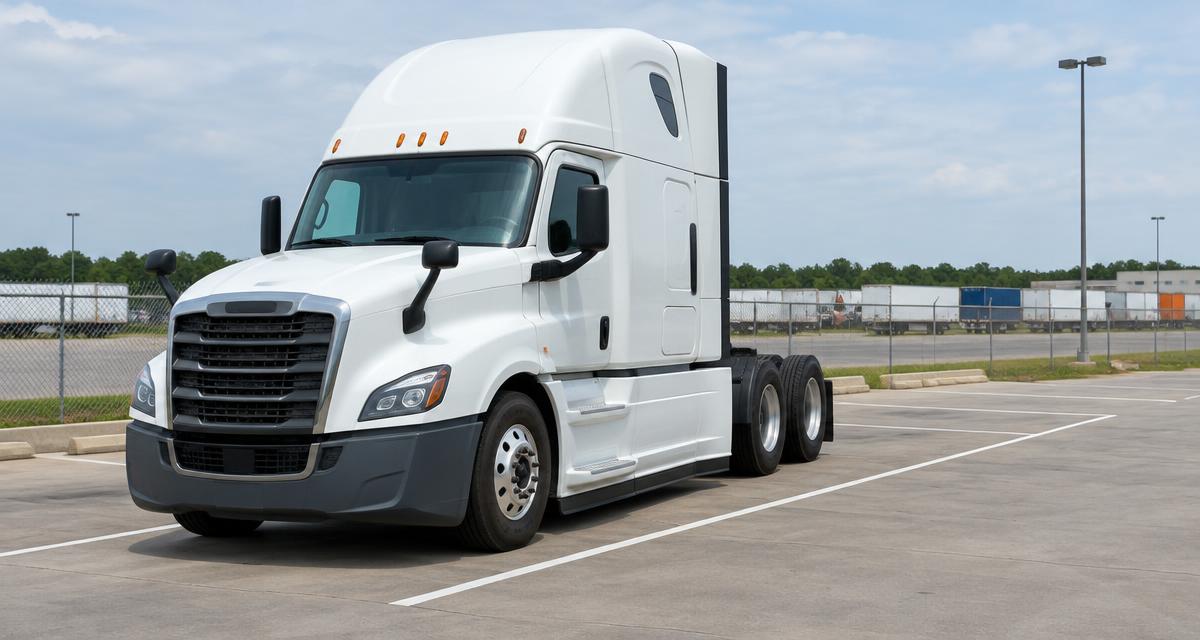
An in-house recruiter looks cheaper on paper because you only see a salary. An agency looks expensive because you see a fee per driver. Both comparisons leave out the biggest number in the room: what every day of an unseated truck costs you.
This guide walks through all three costs side by side: the empty truck, the in-house recruiter, and the three ways recruiting agencies charge. At the end you will have a simple formula to run on your own numbers, plus the questions to ask any agency before you sign.
If you want the details on job board spend specifically, read our breakdown of why Indeed is eating your recruiting budget. This article picks up where that one ends: who should do the recruiting, and what that choice really costs.
Start here: what an empty truck costs you
An unseated truck is not a neutral asset. You still pay for insurance, plates and the note on it, and it earns nothing.
The problem is bigger than most owners think. ATRI's 2026 operational cost study found that carriers left about 10% of their trucks unseated on average in 2025, while the average cost to run a truck hit a record $2.336 per mile. Fixed costs on those parked trucks get spread across fewer paying miles, which drags down the whole fleet's margin.
The TCA Profitability Program put a number on the parked truck itself: roughly $2,600 per month in net loss per unseated tractor, before maintenance and other friction costs. That figure is from 2020. With insurance and equipment costs up since then, treat it as a floor.
And that is only what the truck costs you. The bigger loss is the freight it did not haul.
Run your own number
Use this formula with your own figures:
Cost per empty day = miles per day × (revenue per mile − variable cost per mile) + fixed cost per day
In plain words: the profit the truck would have made on a normal day, plus the fixed costs you pay whether it moves or not.
Empty truck cost calculator
Enter your own numbers to estimate what trucks without drivers cost you.
Fuel, driver pay, tires, maintenance
Insurance, truck payment, plates
Cost per day
$446.67
Cost for 30 days
$13,400
| - | per day | for the period |
|---|---|---|
| Lost contribution | $360 | $10,800 |
| Fixed costs | $86.67 | $2,600 |
This is an estimate based on the numbers you entered, not a guaranteed loss.
Here is an example for a regional dry van carrier. Swap in your own numbers.
| Input | Example value |
|---|---|
| Miles per day | 450 |
| Revenue per mile | $2.40 |
| Variable cost per mile (fuel, driver pay, tires, maintenance) | $1.60 |
| Lost contribution per day | $360 |
| Fixed cost per day (about $2,600 / 30) | $87 |
| Cost per empty day | about $447 |
| Cost of a 30-day vacancy | about $13,400 |
That is one truck, one month. A 40-truck fleet running 10% unseated has four trucks in that position at any time.
This is the number that should drive the recruiting decision. Every option below should be judged by one question: how many empty days does it remove, and at what price?
What an in-house CDL recruiter really costs
A recruiter's salary is the smallest part of the bill. The full cost has five pieces.
1. Salary and payroll load. Salary sites put driver recruiter pay anywhere from about $41,000 as a national average to around $77,000, depending on market and experience. Then add payroll taxes, benefits and any per-hire bonus. BLS data for June 2026 shows that for full-time private-sector workers, benefits made up 31.5% of total employer compensation costs. That works out to roughly 45 cents on top of every dollar of wages.
2. Advertising. A recruiter without an ad budget is a recruiter with an empty phone. Job boards, Facebook and Google ads, and sign-on bonuses are all separate from salary. Our Indeed cost breakdown covers what that spend looks like today.
3. Software. An applicant tracking system, a texting tool, background and MVR checks, and a phone system. None of it is optional if you want to move fast.
4. Ramp time. A new recruiter who has never hired drivers needs months to learn DOT qualification rules, how to read an MVR, and how to talk to drivers in their own language. Those months are paid, and your trucks are still parked.
5. Coverage gaps. One person works one shift. Drivers apply at 9 p.m. from a truck stop and on Sunday afternoon at home. As we covered in our speed-to-lead playbook, the first carrier to call usually wins the driver. When your recruiter is sick, on vacation or quits, recruiting stops completely.
The last point is the one owners feel most. If your only recruiter leaves, you pay to rehire and retrain while the driver pipeline goes cold.
When the math works
An in-house recruiter gets cheaper per hire as volume goes up. If one recruiter fills 6 seats a month, the fixed cost is spread thin. If they fill 1 or 2, every hire carries a big share of a full salary. That is why fleets that hire constantly tend to keep recruiting in-house, and fleets that hire in bursts often do not.
What a CDL recruiting agency costs: the three pricing models
"Recruiting agency" covers very different businesses. Before comparing prices, find out which model you are actually buying, because each one puts the risk on a different side of the table.
1. Monthly retainer (you pay for effort)
You pay a fixed monthly fee, often plus your ad spend, and the agency runs campaigns and sends you applications. Your team still screens, calls and hires.
This is really outsourced marketing. It can work well if you already have a strong recruiter who just needs more applicants. The risk sits with you: if no one gets hired, you still pay.
2. Percentage of salary (classic staffing)
Traditional staffing firms charge a placement fee based on the driver's first-year pay. One 2026 industry guide puts this at 20% to 35% of annual salary, which works out to five figures per driver on a typical CDL-A wage. Some firms also offer temp-to-hire, where the driver starts on the agency's payroll.
This model is common in other industries. For a small carrier hiring several drivers a year, it gets expensive fast.
3. Flat fee per hire (you pay for results)
You pay a set fee only when a driver is hired, and often only after they show up to orientation or stay a set number of days. Some agencies combine this with a smaller retainer; TransForce, for example, describes offering either a per-hire fee or a retainer plus a per-hire fee depending on volume and location.
The key detail in any flat-fee deal is the replacement guarantee. If the driver quits in week two, does the agency replace them for free, and for how long? A 14-day guarantee and a 90-day guarantee are very different products at the same price.
Which model fits a small carrier
For fleets that cannot afford a full-time recruiter, pay-per-hire is usually the cleanest fit. You pay when a seat is filled, so the agency's incentives match yours: fill the truck fast, with a driver who stays.
Side by side: four ways to fill a seat
| Option | How you pay | Who carries the risk if no one is hired | Time to first hire | Nights and weekends | Best fit |
|---|---|---|---|---|---|
| In-house recruiter | Salary + payroll load + ads + software | You | Slow at first (hiring and ramp time) | Only if you staff it | Fleets hiring every week, year round |
| Retainer agency | Monthly fee + ad spend | You | Fast to launch ads, hires depend on your team | Depends on the agency | Fleets with a strong recruiter who needs more applicants |
| Percentage staffing | Share of the driver's first-year pay | Agency until placement, then you | Fast | Usually yes | Large fleets or urgent temp needs |
| Pay-per-hire agency | Flat fee per driver hired | Agency | Fast if they already have drivers in their pipeline | Usually yes | Small and mid fleets hiring in bursts |
The column that matters most is the third one. Whoever carries the risk of an empty truck has the strongest reason to fill it.
When an in-house recruiter makes sense
Keep recruiting in-house if most of these are true:
- ★You hire drivers every week, all year, not just when someone quits.
- ★You already have a recruiter who knows DOT qualification and talks to drivers well.
- ★Your applicant volume is steady, and the problem is follow-up, not lead flow.
- ★You can cover evenings and weekends, through shifts, a text tool or both.
- ★Your driver turnover is low enough that one person can keep up.
Even then, many fleets use an agency as backup: for a new terminal, a new lane, a hard-to-fill role like hazmat or team drivers, or the weeks when the recruiter is out.
When outsourcing CDL recruiting makes sense
An agency, especially a pay-per-hire one, usually wins when:
- ★You have trucks parked right now and every week costs you money.
- ★You hire in bursts: a new contract, a new lane, seasonal volume.
- ★Recruiting is a side job for your dispatcher, safety manager or yourself.
- ★You are expanding into a state where nobody knows your name yet.
- ★You have tried job boards, paid for clicks, and got applicants who never answered the phone.
The last point is common. Many owners tell us they are not short on applications; they are short on drivers who actually qualify, answer, and show up. A good agency's real product is not the ad. It is the screening, the phone calls, and a pipeline of drivers who are already looking.
8 questions to ask any CDL recruiting agency before you sign
What exactly counts as a hire?
Signed offer, orientation attended, or first load delivered? This one definition decides what you pay for.
What is the replacement guarantee, and for how many days?
Get it in writing, including what happens if the driver is fired for cause.
Do you already have drivers, or do you start advertising after I sign?
An agency with an active pipeline in your area can fill a seat in days. One that starts from zero is a slower retainer with a different name.
What do you check before a driver reaches me?
CDL class and endorsements, MVR, PSP, employment history, drug and alcohol history? Remember that 49 CFR 391.51 requires every motor carrier to maintain its own driver qualification file for each driver it employs, so the agency's checks support your process; they do not replace it.
How fast do you contact a new applicant, including nights and weekends?
Ask for their real average, not a promise.
Whose name do drivers hear?
Some agencies recruit under your brand, others under their own. Either can work, but you should know which.
Can I talk to two carriers my size who use you now?
Real references beat any case study on a website.
What does your reporting show?
At minimum: applications, qualified rate, hires, orientation show rate, and 30- and 90-day retention for drivers they placed.
An agency that answers all eight clearly, in writing, is worth a call. One that gets vague on questions 1, 2 or 7 is telling you something.
Frequently asked questions
01How much does a CDL recruiting agency cost?
+
02Is it cheaper to hire an in-house driver recruiter?
+
03How much does an empty truck cost a carrier?
+
04What is pay-per-hire truck driver recruiting?
+
05Does a recruiting agency handle DOT driver qualification?
+
06How fast can an agency fill a CDL driver seat?
+
Get drivers in your trucks, not applications in your inbox
Trucky recruits CDL drivers through our own campaigns, screens them, and delivers qualified drivers ready for your orientation. You tell us your lanes, equipment, pay and hiring standards. We bring drivers who fit them. Tell us how many seats you need to fill and where, and we will come back with an honest answer on how fast we can fill them.
Related reading: Speed to lead in CDL recruiting · Driver retention starts before they sign · CDL driver application forms that convert
Sources
- ★Commercial Carrier Journal: Trucking cost per mile sets new record high (ATRI 2026 study), July 2026
- ★FreightWaves: Why are unseated tractors a critical factor affecting truckload carriers? (TCA Profitability Program), 2020
- ★U.S. Bureau of Labor Statistics: Compensation costs for private industry workers, June 2026
- ★eCFR: 49 CFR 391.51, General requirements for driver qualification files
- ★CareerBliss: Driver recruiter salaries
- ★VelvetJobs: Truck driver recruiter salary
- ★Classet: How to hire CDL drivers fast, June 2026
- ★TransForce: Digital recruiting
Book a 30-minute strategy call.
Walk away with a plan - even if we never work together.
Book a call →